Why templates are often not enough
Many websites look the same, even though the companies behind them are completely different. That happens when layouts are only adapted visually, but not to the industry and the offer.
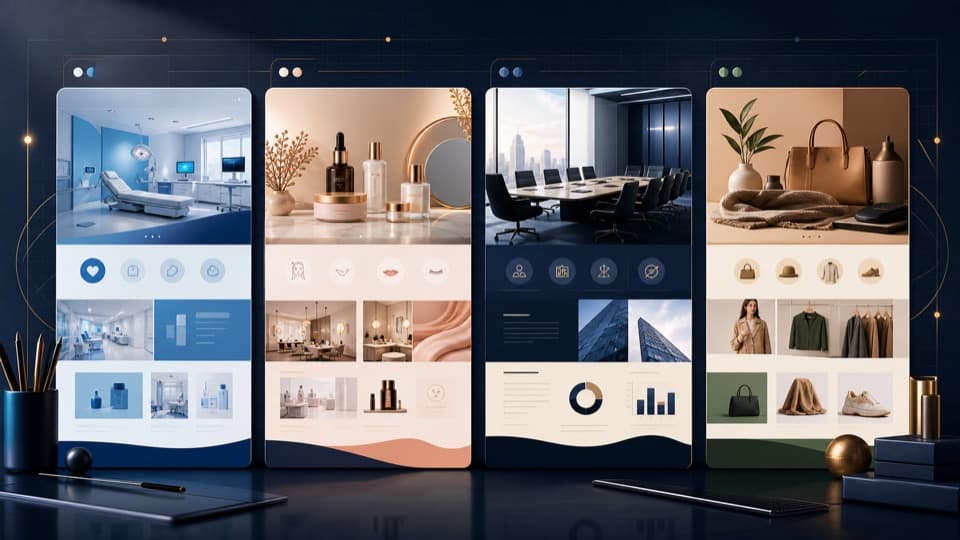
A studio sells atmosphere and confidence in booking an appointment. A practice sells competence and availability. A consultancy sells certainty and clarity. These differences need to become visible in the structure.
The right focus for each industry
For local service providers, quick contact paths, reviews and services are important. Consulting-heavy offers need more explanation, process and trust. For shops, product guidance, categories and an easy path to purchase count.
So the question is not: Which website looks beautiful? But rather: Which website helps customers understand faster and decide with more confidence?
- Practice: availability, services, team, appointments
- Studio: atmosphere, images, prices, booking
- Consultancy: trust, process, benefits, contact
- Shop: categories, products, orientation, purchase impulse
Which content builds trust in each industry
Trust is not built the same way everywhere. A practice benefits from clear information on services, team, availability and the appointment process. A studio needs strong images, prices, atmosphere and simple booking. An insurance broker or consultancy has to show certainty, experience and an understandable process.
If this content is missing, the look may still be attractive, but the website answers too little. That is why every industry website should first define which doubts visitors have and which proof reduces those doubts.
- Practices need clear availability and a service overview
- Studios need atmosphere, images and simple appointment paths
- Consultancies need trust, process and benefit arguments
- Shops need categories, product logic and purchase incentives
Why the order on the page is decisive
Not only the content itself matters, but also its order. Visitors first need to understand what it is about, then build trust and then be able to act easily. If this order is reversed, the website quickly feels exhausting.
A practice visitor first looks for orientation and contact. A studio customer wants to see atmosphere, services and appointments. A consulting client wants to understand how the process works and why they can have confidence.
- Orientation first, then details
- Make trust visible before the enquiry is expected
- Place contact paths where decisions are made
- Weight industry logic more heavily than plain design templates
How this leads to a fitting look
The look follows the content. Colours, typography, image areas and spacing should support the positioning. A wellness website may feel calm and high-end, while a cleaning company should appear clearer, more direct and more service-oriented.
The result is a presence that does not look generic, but fits the brand.